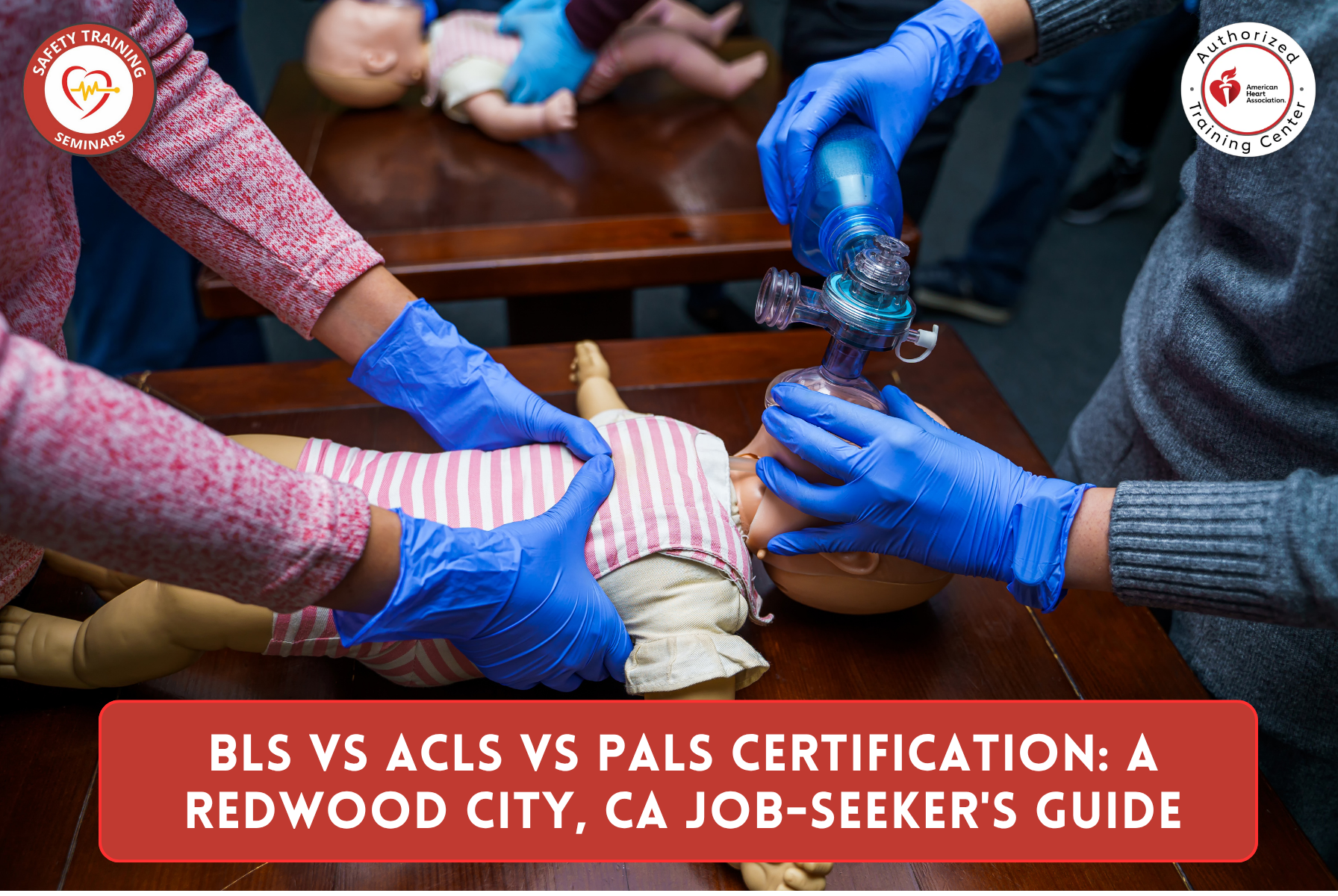
A healthcare job posting can turn three short acronyms into an important decision. If you are applying for nursing, EMS, clinical, or patient-care work in Redwood City, CA, you may see BLS, ACLS, PALS, or a combination listed among the qualifications. They are not interchangeable, and taking the most advanced-sounding course is not automatically the right choice.
In practical terms, BLS covers foundational CPR and basic life-support skills for healthcare professionals. ACLS prepares clinicians who participate in managing serious adult cardiovascular emergencies. PALS focuses on advanced emergency care for infants and children. The credential you need depends on the position, patient population, and employer requirements—not simply your job title.
Key Takeaway: Match the exact certification named in the job description. BLS is a common healthcare foundation, while ACLS and PALS are advanced, role-specific courses that may be added when adult critical-care or pediatric emergency responsibilities are involved.
Start With the Job Posting, Not the Course List
Before registering, read the certification section of the job description carefully. An employer may list “BLS required,” “BLS and ACLS required,” or a combination of BLS, ACLS, and PALS. Those differences matter.
A BLS CPR Certification Course may be the only life-support credential needed for some healthcare positions. Roles involving emergency, intensive, procedural, or pediatric care may require additional training. The American Heart Association specifically advises ACLS students to confirm with their employer that they are selecting the correct course.
Check four details before enrolling:
- The exact certification name
- The course provider or credential the employer accepts
- Whether it must be current before your start date
- Whether the credential is required or merely preferred
If the posting is unclear, ask the recruiter, HR department, hiring manager, or clinical coordinator rather than guessing.
BLS: The Foundation for Many Healthcare Roles
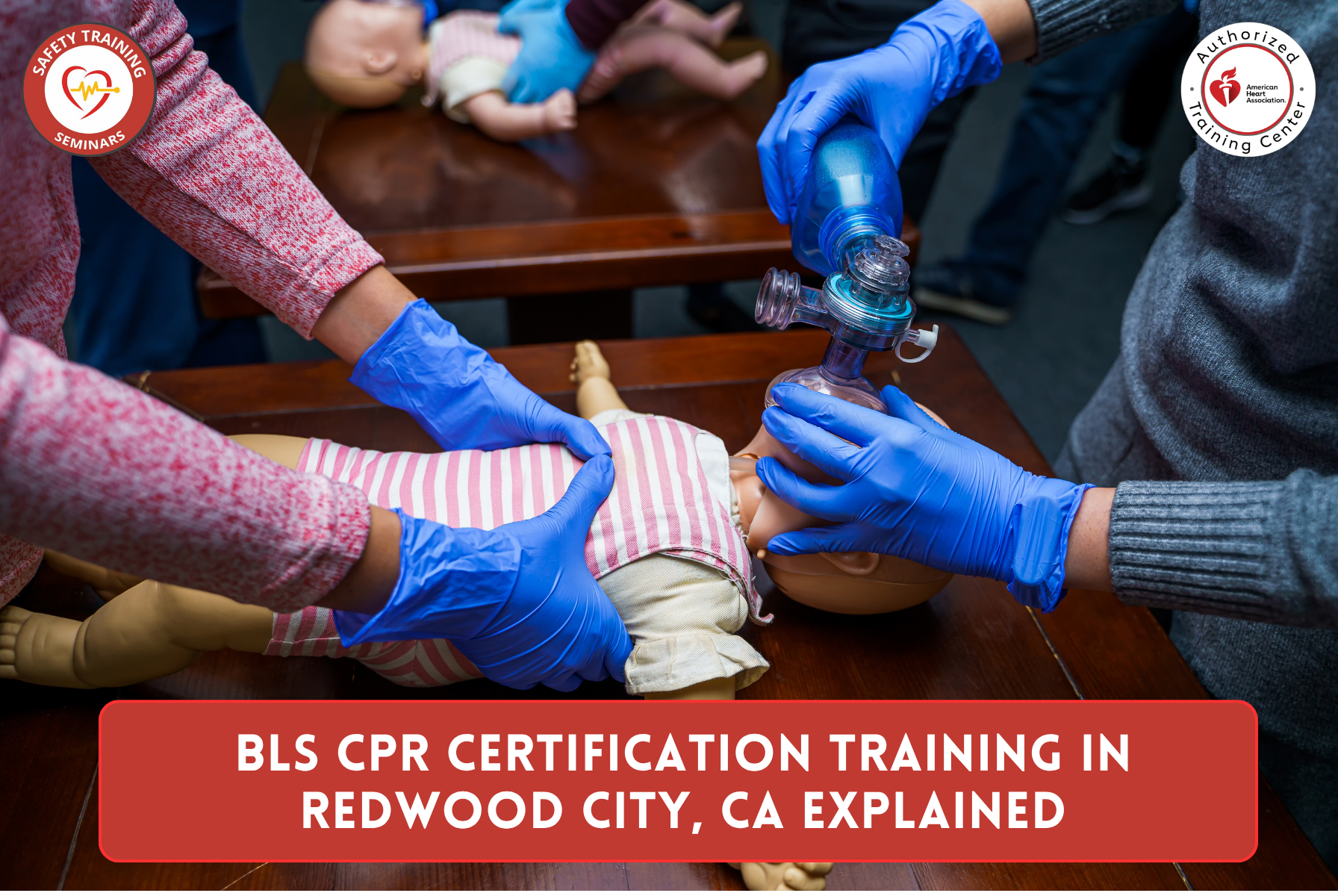
Basic Life Support is healthcare-focused CPR training. The AHA describes BLS as covering CPR, AED use, and ventilations, with tracks for prehospital and in-facility providers.
BLS is intended for healthcare professionals, trained first responders, and people in healthcare training programs. For a job seeker, it is especially relevant when responding to cardiac arrest or respiratory emergencies may be part of professional duties.
That can include nurses, nursing students, EMTs, medical assistants, dental professionals, and other patient-facing workers, depending on the employer. If a Redwood City job listing specifically asks for healthcare-provider BLS, confirm that the course you choose produces the required completion card rather than assuming any general CPR class will satisfy the requirement.
ACLS: Advanced Adult Cardiovascular Care
Advanced Cardiovascular Life Support builds on basic resuscitation skills. The AHA states that ACLS is designed for healthcare professionals who direct or participate in managing cardiac arrest, stroke, and other cardiopulmonary emergencies, including personnel in emergency response, emergency medicine, intensive care, and surgery.
For job seekers, ACLS becomes more relevant when a position expects participation in advanced management of unstable adult patients. If a posting asks for both BLS and ACLS, treat them as separate requirements unless the employer says otherwise.
Professionals searching around the Peninsula can also compare BLS, ACLS, and PALS course options near Menlo Park when choosing where to complete required training.
PALS: For Roles Involving Pediatric Emergencies
Pediatric Advanced Life Support is centered on critically ill or injured infants and children. The AHA says PALS is intended for healthcare professionals who respond to pediatric emergencies and for personnel in emergency response, emergency medicine, intensive care, and critical care settings that encounter pediatric patients regularly.
For a job seeker, PALS is most relevant when the prospective role includes meaningful pediatric emergency responsibilities. It may be requested for certain pediatric nurses, emergency clinicians, paramedics, physicians, and other professionals who manage seriously ill children.
PALS is not simply a higher-level version of BLS. If a position involves children but does not mention PALS, confirm the requirement instead of assuming you need it.
Candidates farther north can review healthcare CPR and advanced life-support training near Hillsborough as another nearby option.
Does Having All Three Make You More Employable?
Not necessarily. Having BLS, ACLS, and PALS may be useful when a position actually calls for all three, but collecting unrelated credentials does not replace meeting the employer’s specific qualifications.
A better approach is to work backward from the job:
- Identify the role and patient population.
- Read the certification requirements exactly as written.
- Separate required credentials from preferred ones.
- Confirm unclear wording before paying for a course.
- Select the course format that matches the employer’s expectations.
For students and early-career workers, requirements can change as they move into emergency, critical-care, or pediatric roles.
Online, Blended, and Hands-On Training
An online component does not necessarily mean the entire certification process is online. The AHA offers blended-learning pathways for healthcare courses, with online coursework followed by a hands-on skills component.
That matters when a job posting asks for an AHA course completion card or when an employer requires demonstrated skills. Before registering, confirm the required credential, training format, and whether you are completing an initial course or a renewal.
Candidates coming from the coast side can review the Half Moon Bay CPR, BLS, ACLS, and PALS course page while comparing training locations.
Planning Certification Around a Redwood City Job Search
Healthcare candidates often apply across several Peninsula communities. Someone may live in San Bruno or Millbrae while interviewing in Redwood City or Menlo Park. Location flexibility can help, but compare each employer’s certification requirements separately.
For candidates coming from the coast, BLS, ACLS, and PALS training options for Pacifica provide another nearby course-location resource.
A Local Training Option for Redwood City Candidates
Safety Training Seminars provides CPR and healthcare life-support training for job seekers and professionals in Redwood City. The local training center is at 650 Broadway, Suite 4, Redwood City, CA 94063.
Safety Training Seminars identifies itself on its local website as an American Heart Association Authorized Training Center and lists BLS, ACLS, and PALS options. Compare those options against the exact wording in your job posting before enrolling.
Frequently Asked Questions
Should I get BLS before applying for healthcare jobs in Redwood City?
Only if BLS is relevant to the roles you are pursuing or specifically requested by employers. BLS is designed for healthcare professionals, first responders, and healthcare students, but requirements differ by position. Check current job descriptions and confirm unclear requirements with the employer before enrolling.
Do I need ACLS if I already have BLS?
Not for every job. ACLS is designed for professionals involved in managing adult cardiac arrest, stroke, and other cardiopulmonary emergencies. If an employer lists ACLS separately from BLS, treat it as an additional requirement rather than assuming one replaces the other.
Is PALS useful if I want to work with children?
It can be, but the responsibilities of the job determine whether it is required. PALS is intended for professionals who respond to serious emergencies involving infants and children. A pediatric setting alone does not prove PALS is mandatory, so confirm the exact credential with the employer or clinical program.
Can I train near Redwood City if I live in another city?
Generally, your home city does not determine which training location you must use. What matters is whether the selected course satisfies the organization requiring the credential. Candidates from Menlo Park, Hillsborough, San Bruno, Pacifica, and nearby communities should confirm the course first and then choose a suitable location.
Should BLS, ACLS, and PALS appear separately on my résumé?
Yes, if the credentials are current and relevant. Listing the specific course is clearer than using a broad phrase such as “CPR certified.” If a credential has expired or an employer requires a particular provider, verify whether renewal is necessary before onboarding.
Build Your Certification Plan Around the Job You Want
For Redwood City healthcare job seekers, BLS, ACLS, and PALS serve different purposes. BLS provides foundational healthcare CPR and life-support skills; ACLS addresses advanced adult cardiovascular emergencies; and PALS focuses on advanced pediatric emergencies. The correct combination depends on the position rather than on which course sounds most advanced.
Start with the job posting, note the exact credential and provider requirements, and confirm anything unclear with the employer, school, or clinical program. Safety Training Seminars offers a local Redwood City option for candidates who need relevant life-support training. Once your requirement is clear, review the appropriate nearby course-location page for the course type, training format, location details, and registration information before enrolling.