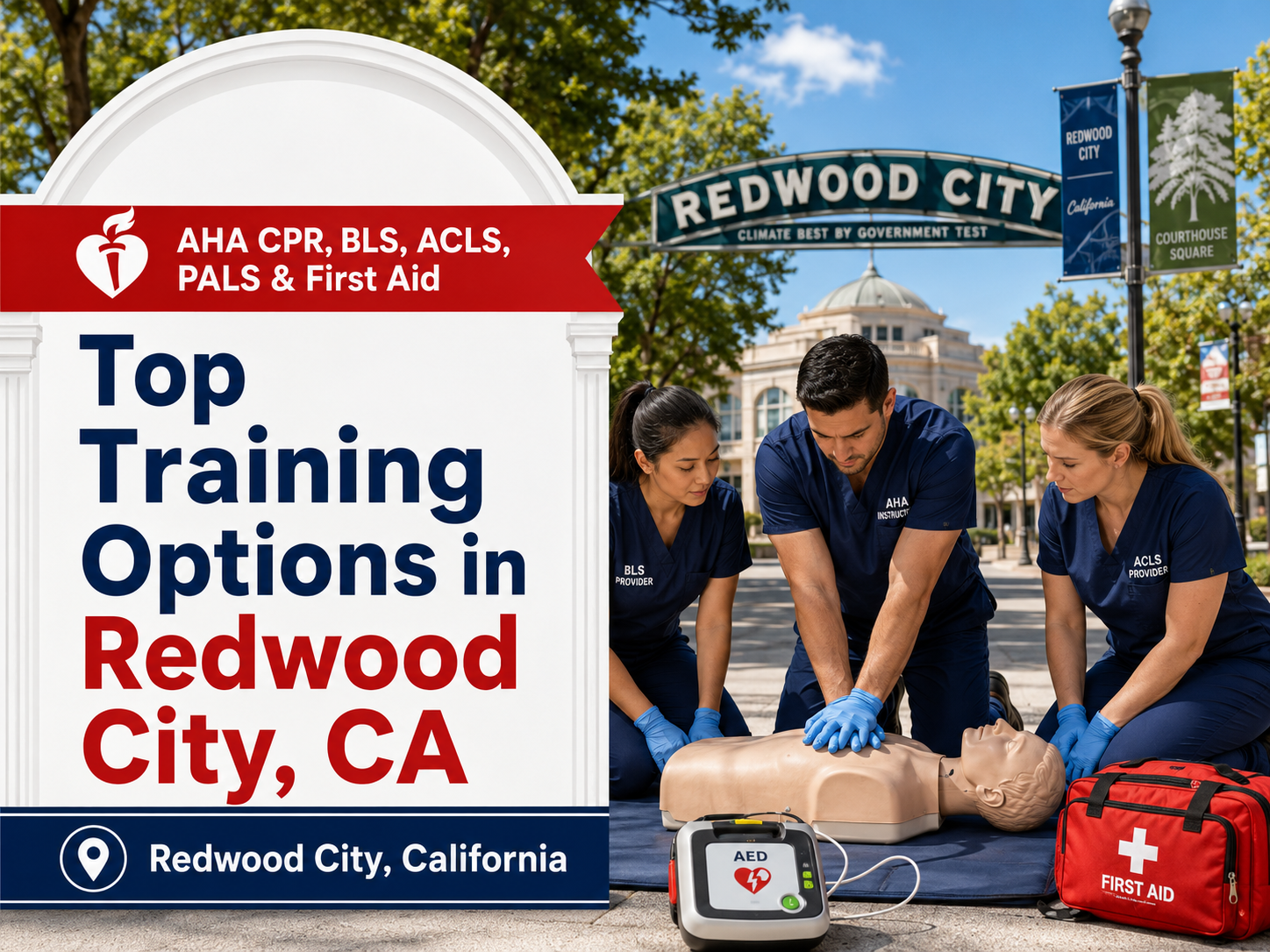
Redwood City learners can have very different reasons for pursuing CPR and life-support training. A nursing student may need BLS before clinical work, a healthcare professional may be looking for ACLS or PALS, while a teacher, caregiver, or workplace employee may need CPR, AED, or First Aid training. American Heart Association Self-Guided Learning offers a flexible way for eligible learners to complete applicable educational material independently while still addressing hands-on and skills requirements when those components apply.
The format can be useful for people whose work, school, or family responsibilities make fixed classroom schedules difficult. However, Self-Guided Learning should not automatically be treated as an online-only course. The requirements vary by course, and some training includes hands-on practice or skills testing. This guide explains the differences and what Redwood City learners should confirm before enrolling.
Key Takeaway
AHA Self-Guided Learning allows eligible learners to work through the educational portion of applicable training independently, while required practical or skills components may still need to be completed. The correct course depends on the learner’s role and the requirements established by an employer, school, healthcare organization, or other applicable authority.
What Is American Heart Association Self-Guided Learning?
Self-Guided Learning gives learners greater control over when they complete the educational portion of applicable training. Rather than having every part of the learning process tied to a traditional classroom schedule, the learner works through the assigned material independently.
The exact process depends on the course, but learners may generally need to:
- Identify the specific course required for their role.
- Complete the applicable educational material.
- Participate in required hands-on practice.
- Complete applicable skills testing or verification.
- Receive the relevant course completion documentation or eCard after successfully meeting the requirements.
This is an important distinction when comparing Self-Guided Learning with an online-only program. Using online educational material does not necessarily mean that every course requirement can be completed remotely. Where hands-on skills are required, those components remain part of the training process.
BLS Classes in Redwood City for Healthcare Professionals
Basic Life Support (BLS) is generally intended for healthcare professionals and appropriate healthcare students whose responsibilities require healthcare-level basic life-support training.
Nurses, nursing students, physicians, EMTs, paramedics, medical assistants, dental professionals, and other healthcare personnel may encounter BLS requirements. However, requirements can vary. A nursing program may specify one course, while an employer or healthcare organization may establish its own expectations.
For example, a nursing student preparing for clinical placement in the Redwood City area should first check the program’s requirements before choosing between BLS and general CPR training.
If BLS is the required course, learners can review BLS and CPR classes in Redwood City and compare the course information with the instructions provided by their school or employer.
ACLS Training in Redwood City
Advanced Cardiovascular Life Support (ACLS) is designed for appropriate healthcare professionals involved in managing adult cardiovascular emergencies.
ACLS serves a different purpose from basic CPR or BLS. It may be relevant to physicians, nurses, paramedics, and other healthcare professionals whose roles involve advanced adult cardiovascular emergency care.
Someone researching ACLS training in Redwood City should begin by confirming the requirement with their employer, healthcare organization, or educational program. The required course and accepted training format can differ depending on the professional role.
Self-Guided Learning may provide flexibility for the educational component, but learners should still determine whether hands-on practice, skills testing, or other course requirements apply.
PALS Classes in Redwood City
Pediatric Advanced Life Support (PALS) focuses on emergency care involving pediatric patients and is intended for appropriate healthcare professionals.
PALS may be relevant to healthcare workers whose responsibilities include pediatric patients or pediatric emergencies. It should not automatically be considered interchangeable with BLS or ACLS because each course addresses a different training purpose.
A healthcare professional searching for PALS classes in Redwood City should first verify whether PALS is specifically required by their employer, healthcare organization, or educational program. Once the requirement is clear, they can evaluate the available learning format and determine whether Self-Guided Learning fits their circumstances.
CPR, AED and First Aid Training
CPR, AED, and First Aid training can apply to people outside healthcare professions. Teachers, childcare workers, coaches, fitness professionals, workplace employees, caregivers, parents, and other community members may need one or more of these courses.
CPR/AED training generally focuses on CPR response and AED use, while First Aid addresses a broader range of injuries and medical situations. An organization may require CPR/AED, First Aid, or a combination.
For that reason, someone searching for CPR classes in Redwood City should start with the requirement rather than simply choosing the first course labeled CPR. A workplace employee, childcare provider, or teacher may have a specific course requirement that differs from the training needed by a healthcare professional.
Which Course Is Right for You?
The following comparison provides a general starting point:
| Course | Typical audience |
| BLS | Healthcare professionals and appropriate healthcare students |
| ACLS | Healthcare professionals involved in adult cardiovascular emergency care |
| PALS | Healthcare professionals involved in pediatric emergency care |
| CPR/AED | General public and workplace audiences |
| First Aid | Workplace, education, childcare, community, and general audiences |
This table is not a universal statement of professional or legal requirements. If you are unsure which course you need, check directly with your employer, school, licensing organization, healthcare organization, or training program.
That step is especially useful when deciding between BLS and CPR or determining whether an advanced course such as ACLS or PALS is actually required.
Self-Guided Learning vs. Classroom vs. Online-Only Training
Understanding the difference between these formats can prevent confusion during registration.
Self-Guided Learning
The learner completes applicable educational material independently and has more control over when that learning takes place. Depending on the course, hands-on skills practice and testing may still be required.
Traditional Classroom Training
Classroom training follows scheduled sessions and involves attending at designated times. Learners receive direct instructor interaction during the scheduled course.
Online-Only Training
Online-only programs may consist primarily or entirely of digital instruction. Such a format may not satisfy an organization that specifically requires hands-on skills practice or another accepted course format.
The appropriate choice depends on both the learner’s schedule and the requirements they need to fulfill. A flexible format is useful only if it matches the course requirement.
Why Self-Guided Learning May Help Redwood City Learners
Redwood City has learners balancing different professional and personal schedules. Healthcare employees may work changing shifts, nursing and allied-health students may divide their time between classes and clinical responsibilities, and teachers or childcare workers may have limited availability during standard training hours.
Self-Guided Learning can be appealing in these situations because the educational component can be organized around existing commitments. Professionals traveling between Redwood City and nearby communities may also value flexibility when fitting training around work or school.
The same consideration can apply to someone renewing a required course. Even then, the learner should verify the accepted course and format before starting.
Local Training with Safety Training Seminars
For people researching a local option, Safety Training Seminars provides a Redwood City training center at 650 Broadway, Suite 4, Redwood City, CA 94063.
The appropriate course depends on the reader’s requirement. Healthcare professionals and students may need BLS, ACLS, or PALS, while educators, workplace employees, caregivers, and other community members may need CPR/AED or First Aid.
Before registering, review the course type, learning format, and applicable hands-on or skills requirements. If your employer or school provided specific instructions, compare those instructions with the course information.
You can also review Redwood City CPR, BLS, ACLS, and PALS course information when evaluating local training options.
What Should You Confirm Before Enrolling?
A short verification step can help prevent completing the wrong course. Before registration, confirm:
- The exact course name required.
- Whether Self-Guided Learning is an accepted format.
- Whether hands-on practice or skills testing applies.
- What course completion documentation is expected.
- Whether your employer, school, or organization has additional requirements.
These checks are particularly useful when a requirement uses a specific course name such as BLS, ACLS, or PALS rather than simply requesting CPR training.
Frequently Asked Questions
Can a Redwood City nursing student use Self-Guided Learning for BLS?
They may be able to, depending on the course and school requirements. BLS is generally intended for healthcare professionals and appropriate healthcare students, but educational programs can establish their own requirements. Nursing and allied-health students should confirm both the required course and accepted format with their program before enrolling.
Does Self-Guided Learning mean there are no hands-on requirements?
No. Self-Guided Learning describes the independent educational component and does not automatically remove practical requirements. If the selected course includes hands-on practice or skills testing, those components still need to be completed according to the course process.
Is online-only CPR training sufficient for a Redwood City workplace?
Not necessarily. An employer may require a particular course or hands-on skills component that an online-only program does not provide. Employees should ask their workplace which course and format are accepted before registering, particularly when the requirement involves BLS, CPR/AED, or First Aid.
How can healthcare professionals decide between BLS and ACLS?
Start with the requirement attached to the professional role. BLS is generally associated with basic life-support training for healthcare professionals, while ACLS is designed for appropriate healthcare professionals involved in adult cardiovascular emergency care. Employers and healthcare organizations may have different requirements, so confirmation is recommended.
Where can local learners investigate training options?
Safety Training Seminars offers a Redwood City training location for learners researching applicable CPR and life-support courses. The best option depends on whether the learner needs BLS, ACLS, PALS, CPR/AED, First Aid, or another course. Checking the employer or school’s requirement first can make the selection process more straightforward.
Finding the Right Self-Guided Training Option in Redwood City
American Heart Association Self-Guided Learning can give eligible learners more flexibility when completing the educational portion of applicable training. It is different from assuming that an online-only course satisfies every requirement, because hands-on practice and skills testing may still apply depending on the course.
For Redwood City learners, begin by identifying the exact training required for your role. Healthcare professionals and students may need BLS, ACLS, or PALS, while workplace employees, teachers, caregivers, and community members may need CPR/AED or First Aid.
Once the requirement is confirmed, review the relevant Safety Training Seminars option and compare the course details with the instructions from your employer, school, or organization. This approach helps you choose a training format that fits your schedule without losing sight of the actual course requirement.