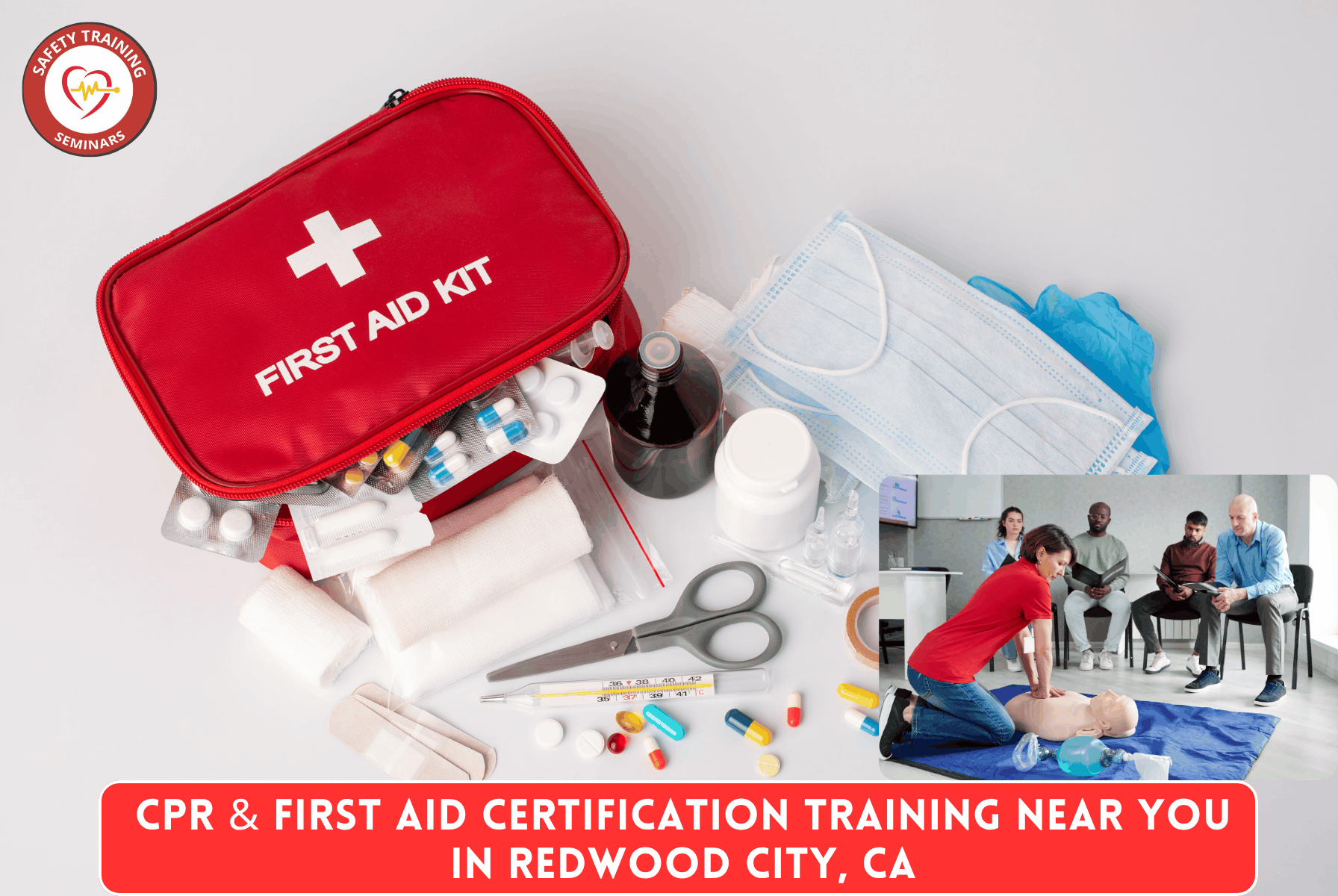
Redwood City is home to healthcare facilities, professional workplaces, schools, childcare environments, and community spaces where emergency preparedness can make a meaningful difference. Knowing how to respond to a cardiac emergency, choking incident, or unexpected injury is a valuable skill for people working in these settings, as well as individuals who want to be better prepared outside their professional responsibilities.
For residents, healthcare workers, and students seeking CPR & First Aid Certification Training in Redwood City, choosing the right course starts with understanding what the training covers and who it is designed for. Safety Training Seminars provides local American Heart Association (AHA) training options, including CPR, First Aid, and healthcare-provider courses, at its Redwood City training location.
What Should You Expect to Learn in CPR and First Aid Training?
CPR and First Aid education covers different emergency-response skills that help participants recognize potentially life-threatening situations and respond appropriately while professional medical assistance is being arranged.
CPR (Cardiopulmonary Resuscitation) focuses on responding to cardiac arrest. Participants learn the importance of recognizing an emergency, performing appropriate chest compressions, and understanding how an Automated External Defibrillator (AED) supports emergency response.
Depending on the selected course, training may also cover:
- Adult CPR and AED use.
- Child and infant CPR concepts.
- Recognizing choking emergencies and appropriate response techniques.
- Basic First Aid for common injuries.
- Recognizing sudden medical emergencies.
- Understanding emergency response procedures.
First Aid education extends beyond cardiac emergencies. It helps participants understand how to recognize and respond to situations involving injuries, sudden illnesses, and environmental emergencies.
The exact subjects depend on the course selected. A general-public CPR and First Aid course is not interchangeable with healthcare-provider Basic Life Support (BLS).
Why Emergency Preparedness Matters Across Redwood City’s Healthcare Community
Redwood City’s healthcare environment includes several important medical facilities serving residents and surrounding Peninsula communities. The City of Redwood City identifies Sequoia Hospital, Kaiser Hospital, and Stanford Medicine Outpatient Center among its local hospital and clinic resources.
These facilities represent different healthcare environments where trained professionals may have responsibilities involving patient care, clinical support, and emergency preparedness.
For nurses, medical assistants, dental professionals, and other patient-facing workers, maintaining appropriate emergency-response training is an important part of professional readiness. Healthcare employees should confirm which course their employer requires rather than assuming that every CPR course satisfies workplace expectations.
The same consideration applies to students entering clinical education programs. Nursing and allied health students may need to complete specific training before beginning clinical placements. Checking requirements early can help avoid selecting an unsuitable course or having to repeat training.
Beyond healthcare facilities, CPR and First Aid knowledge can also benefit Redwood City’s childcare providers, teachers, fitness professionals, workplace employees, and community members.
CPR and First Aid Training for Different Professional Responsibilities
Not everyone seeking CPR training needs the same course. The appropriate option depends on the participant’s responsibilities, experience, and applicable workplace or educational requirements.
Healthcare professionals and clinical students
Healthcare providers and students preparing for patient-facing responsibilities may need AHA Basic Life Support (BLS).
BLS covers high-quality CPR for adults, children, and infants, appropriate ventilation, AED use, choking relief, and effective participation in single-rescuer and team-based resuscitation scenarios.
It is designed for healthcare professionals and other personnel who need basic cardiovascular life-support skills in healthcare or prehospital environments.
Teachers, childcare providers, and caregivers
People responsible for children may benefit from training that addresses pediatric CPR, choking response, and First Aid.
Childcare providers should check whether their employer or applicable licensing requirements specify Pediatric First Aid CPR AED or another particular training program.
Parents, guardians, and caregivers can also benefit from learning how emergency situations involving children differ from those involving adults.
Workplace employees and safety coordinators
CPR and First Aid training can support emergency preparedness in offices, retail businesses, fitness facilities, hospitality environments, and other workplaces.
Employers should identify the appropriate course based on their work activities, applicable requirements, and employee responsibilities.
A general CPR course should not automatically be treated as meeting every occupational training requirement.
Understanding the Difference Between CPR, First Aid, BLS, ACLS, and PALS
One common challenge when searching for CPR classes is determining which training program matches a particular professional or personal need.
| Training program | Primary learning focus | Intended audience |
| CPR AED | CPR fundamentals and AED use | General public and workplace learners |
| First Aid CPR AED | CPR, AED use, and common medical and injury emergencies | General public, employees, and caregivers |
| BLS | High-quality CPR, ventilation, AED use, and team resuscitation | Healthcare professionals and relevant students |
| ACLS | Advanced management of cardiovascular emergencies | Healthcare professionals with appropriate clinical responsibilities |
| PALS | Recognition and management of pediatric emergencies | Healthcare professionals involved in pediatric care |
ACLS and PALS are advanced courses with different learning objectives from general CPR and First Aid education. They should not be selected as substitutes for an employer-required BLS course.
The American Heart Association recommends that learners confirm their course selection with their employer or relevant organization.
Choosing the Right CPR Course Before Registering
Before enrolling in a CPR & First Aid Certification Course in Redwood City, consider a few important details.
1. Confirm your training requirement. Ask your employer, school, or clinical placement coordinator which specific course is accepted. Check whether you need BLS, Heartsaver First Aid CPR AED, or another program.
2. Review the course curriculum. Make sure the selected program covers the emergency-response skills relevant to your responsibilities. For example, a childcare professional may need pediatric training, while a healthcare provider may require BLS.
3. Understand the learning format. AHA courses may be available through classroom, blended-learning, or self-guided options, depending on the course and training center. Some formats require completion of an online learning component followed by a separate hands-on skills session.
4. Check the completion requirements. Determine whether the selected course requires skills practice, skills testing, or both. Completing an online educational module alone does not necessarily satisfy the requirements for an AHA course completion card.
5. Verify the documentation. If your workplace or educational institution requires an AHA Course Completion eCard, confirm that the selected program provides the appropriate completion documentation.
Find CPR and First Aid Training at Safety Training Seminars in Redwood City
Safety Training Seminars offers a local training option for people seeking CPR and healthcare education in Redwood City.
The Redwood City training center is located at:
650 Broadway, Suite 4, Redwood City, CA 94063
Available training options listed for this location include BLS, ACLS, PALS, and First Aid CPR AED programs. Course formats and requirements vary depending on the selected program.
For individuals comparing local options, CPR and First Aid training in Redwood City provides another place to review relevant course information.
Healthcare professionals should review the specific BLS, ACLS, or PALS requirements applicable to their roles. General-public learners should focus on finding a CPR and First Aid program that matches their workplace, caregiving, or personal preparedness needs.
How to Prepare for Your Training
A little preparation can make the registration and learning process easier.
Before attending, consider the following:
- Review the course description and intended audience.
- Confirm the training program with your employer or educational institution.
- Complete any required online learning before your scheduled skills session.
- Review the registration details and training location.
- Check whether you need to bring any course materials or documentation.
- Allow enough time to complete all required learning and skills assessments.
Current schedules, registration options, and course-specific details should be checked directly through the training provider.
Frequently Asked Questions About CPR Training in Redwood City
1. Where can I take CPR and First Aid certification classes in Redwood City?
Safety Training Seminars lists a Redwood City training location at 650 Broadway, Suite 4, Redwood City, CA 94063. Prospective learners can review the available courses and current registration information before enrolling.
2. Is CPR and First Aid training the same as BLS?
No. General CPR and First Aid courses are designed primarily for people with little or no medical training. BLS is intended for healthcare professionals and other personnel who need more comprehensive basic life-support skills, including team-based resuscitation.
3. Do healthcare workers need BLS instead of a general CPR course?
Many healthcare positions require BLS, but requirements vary by employer and professional role. Nurses, medical assistants, dental professionals, and healthcare students should confirm the exact course required by their organization.
4. Does CPR and First Aid training include AED education?
AHA Heartsaver First Aid CPR AED training includes education on CPR and safe AED use, alongside relevant First Aid topics. Course content depends on the specific program selected.
5. How do I choose between classroom and blended CPR training?
The choice depends on the course’s available formats and your learning preferences. Blended learning generally combines independent online education with a required hands-on skills session, while classroom options provide an in-person learning experience. Confirm the completion requirements before registering.
Take the Next Step Toward Emergency Preparedness
The right CPR and First Aid education can help healthcare professionals, workplace employees, caregivers, and community members develop practical emergency-response knowledge.
Whether you need BLS for a healthcare position or CPR and First Aid training for workplace and personal preparedness, begin by identifying your specific requirements.
Safety Training Seminars provides training options at its Redwood City location at 650 Broadway, Suite 4. Review the available Redwood City CPR and First Aid certification classes, confirm the course that matches your needs, and check current registration details before getting started.